


If your growth or data team is expanding into Latin America, Brazil is almost certainly your first or second target market. With over 215 million people, a BRL 400+ billion e-commerce sector, and a consumer culture that revolves around installment payments and local marketplaces, Brazil demands its own intelligence pipeline. The problem? Most of that data is locked behind geo-fences, language walls, and payment-flow complexities that foreign IPs simply cannot reach.
Why Brazilian Proxies Are Non-Negotiable for LATAM Intelligence
Using a US or European IP to scrape Brazilian e-commerce sites is a losing strategy. Here's why Brazilian proxies — residential and mobile IPs physically located in Brazil — are essential:
- Brazil-specific catalogs: Mercado Livre, Americanas, and Magazine Luiza serve different product assortments, pricing, and promotions to Brazilian visitors versus international ones. A US IP sees a filtered, often redirecting experience.
- Real-denominated pricing: Brazilian Real (BRL) prices are the only prices that matter for competitive analysis. Foreign IPs may see USD-converted listings or no pricing at all.
- Aggressive foreign-IP blocking: Major BR retailers rate-limit, CAPTCHA, or outright block non-Brazilian IP ranges. Datacenter IPs from popular cloud regions (us-east-1, eu-west-1) are flagged almost immediately.
- Localized promotions: Flash sales, coupon codes, and installment offers often appear only to Brazilian residential IPs — sometimes only to IPs from specific cities.
A residential IP from São Paulo sees the same Mercado Livre page a local shopper sees. A US datacenter IP sees a stripped-down version — or a 403 error.
Top Brazilian E-Commerce Platforms and What to Scrape
Brazil's e-commerce landscape is dominated by a handful of platforms, each with unique data opportunities:
Mercado Livre — The LATAM Amazon
Mercado Livre (MercadoLibre in Spanish-speaking LATAM) is the region's largest marketplace. For Mercado Livre scraping, the key data points are: product listings with BRL pricing, seller ratings, installment plans, and shipping estimates. Mercado Livre's catalog changes significantly based on the visitor's country — the Brazilian site (mercadolivre.com.br) shows entirely different inventory than the Mexican or Argentine versions.
Americanas
Formerly B2W Digital, Americanas operates one of Brazil's largest e-commerce platforms. It combines marketplace listings with first-party inventory. Key intelligence: category-level pricing trends, promotional banners (which change by region), and fulfillment speed claims that vary by delivery city.
Magazine Luiza (Magalu)
Magalu blends physical retail with a powerful digital presence. Its "Magalu" virtual influencer and social commerce integrations make it unique. Scrape for: social-proof signals (review counts, wishlists), dynamic pricing on electronics and home goods, and installment structures.
OLX Brasil
OLX dominates the C2C classifieds space — used cars, real estate, electronics, and services. For market intelligence, OLX reveals true second-market pricing, demand indicators (view counts, listing velocity), and regional price variations that are invisible from outside Brazil.
Casas Bahia
Casas Bahia is iconic for furniture and appliances sold through installment plans. Its pricing model — where the "parcela" price is often more prominent than the cash price — makes it essential for understanding how Brazilian consumers actually evaluate cost.
| Platform | Primary Data | Geo-Sensitivity | Anti-Bot Level |
|---|---|---|---|
| Mercado Livre | Product prices, installments, seller data | High (country-level) | High |
| Americanas | Pricing trends, promo banners, fulfillment | Medium-High | High |
| Magazine Luiza | Social signals, dynamic pricing, installments | Medium | Medium |
| OLX Brasil | C2C pricing, demand indicators, regional data | Very High (city-level) | Medium-High |
| Casas Bahia | Installment pricing, furniture/appliance catalog | Medium | Medium |
LGPD: Brazil's Data-Protection Law and Web Scraping
Brazil's Lei Geral de Proteção de Dados (LGPD), effective since September 2020, mirrors the EU's GDPR in many respects. For scraping teams, here are the key points:
- Public data is fair game: LGPD primarily regulates personal data — information linked to an identified or identifiable individual. Publicly available product prices, descriptions, and seller aggregate ratings on e-commerce pages are not personal data under LGPD.
- Individual seller data requires caution: Scraping individual seller names, CPF numbers (if visible), or personal contact details may fall under LGPD. Stick to aggregate and business-level data.
- Legal basis: "Legitimate interest" (interesse legítimo) under Article 7(IX) can justify processing public data for market research, provided you conduct a balancing test and document it.
- Data minimization: Collect only what you need for your stated purpose. Don't hoard personal data just because it's accessible.
- Data residency: LGPD does not mandate that data stay in Brazil, but cross-border transfers require adequate protections — similar to GDPR's adequacy requirements.
Practical rule of thumb: scrape product and pricing data freely, avoid collecting individual personal identifiers, and document your legitimate-interest basis if you process any data that could identify a natural person.
Portuguese vs. Brazilian Portuguese: Why pt-BR Matters for Scraping
If your scrapers and NLP models were built on European Portuguese (pt-PT), you will hit accuracy walls in Brazil. The differences are significant enough to affect data quality:
- Vocabulary divergence: "Ecrã" (pt-PT, screen) vs. "tela" (pt-BR). "Telemóvel" vs. "celular". "Autocarro" vs. "ônibus". Product listings use pt-BR exclusively.
- Spelling reforms: While the 2009 orthographic agreement brought pt-PT closer to pt-BR, many older listings and informal seller descriptions predate the reform or ignore it.
- Search keyword optimization: Brazilian shoppers search using pt-BR terms. If your keyword list uses pt-PT variants, you'll miss the majority of relevant listings.
- Sentiment analysis: Slang and informal expressions differ dramatically. "Legal" means "cool" in pt-BR but "legal/law-related" in pt-PT. A pt-PT sentiment model will misclassify Brazilian reviews.
Always set Accept-Language: pt-BR in your request headers and train your NLP models on Brazilian Portuguese corpora.
Payment Flows: Boleto, Pix, and the "Parcela" Economy
Brazilian e-commerce pricing cannot be understood without understanding how Brazilians pay. The displayed price is often not the price consumers compare against.
Boleto Bancário
Boleto is a printable or digital payment slip that allows consumers to pay at banks, lotteries, or online banking. Many e-commerce sites show a "preço à vista no boleto" — a cash discount of 5–15% off the card price. If you're only scraping the card price, you're missing the real floor price.
Pix
Pix, Brazil's instant-payment system launched by the Central Bank in 2020, has rapidly become the dominant digital payment method. Many merchants offer Pix-specific discounts comparable to boleto discounts. Look for "desconto Pix" or "preço Pix" labels on product pages.
Parcelas (Installments)
Brazilian consumers think in monthly installments. A R$ 3,000 television is marketed as "10x de R$ 300 sem juros" (10 installments of R$ 300, interest-free). Your scraper must capture:
- Number of installments
- Per-installment value
- Whether interest is charged ("com juros" vs. "sem juros")
- Total installment cost vs. cash/boleto/Pix price
A price-comparison engine that ignores installment terms is useless in Brazil. Two sellers offering the same cash price may differ dramatically in installment terms — and Brazilian consumers often choose based on installment affordability, not total cost.
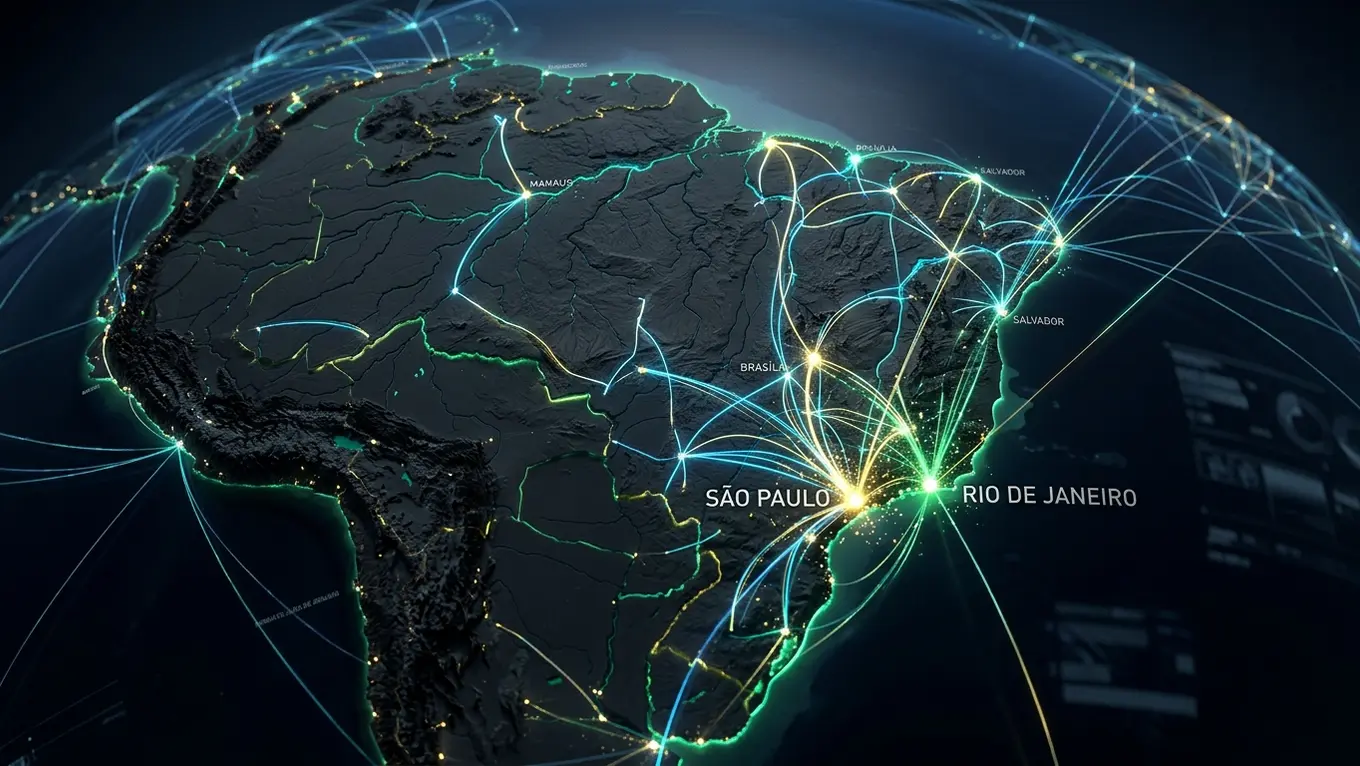
City-Level Geo-Targeting: São Paulo and Rio de Janeiro
Brazil's two largest cities represent distinct consumer markets, and many platforms adjust pricing, inventory, and promotions based on the visitor's location.
São Paulo (SP)
South America's financial capital. SP consumers see the broadest product availability, the most aggressive promotional pricing, and same-day delivery options. SP is also the most competitive market — if a product isn't priced competitively in SP, it's probably not competitive anywhere in Brazil.
Rio de Janeiro (RJ)
Rio's market has distinct characteristics: higher logistics costs for some categories, different seasonal patterns (summer-centric), and localized marketplace dynamics. OLX listings in Rio show significantly different real-estate and vehicle pricing compared to SP.
With ProxyHat, you can target these cities directly in your proxy username:
# São Paulo residential IP
http://user-country-BR-region-sao_paulo-city-sao_paulo:PASSWORD@gate.proxyhat.com:8080

# Rio de Janeiro residential IP
http://user-country-BR-region-rio_de_janeiro-city-rio_de_janeiro:PASSWORD@gate.proxyhat.com:1080
This lets you compare how the same product page renders differently for a shopper in SP versus RJ — essential for localized pricing intelligence.
Implementation: Scraping Mercado Livre with Brazilian Proxies
Here's a practical Python example using LATAM e-commerce proxies via ProxyHat to scrape Mercado Livre product data:
import requests
from bs4 import BeautifulSoup

PROXY = "http://user-country-BR-region-sao_paulo-city-sao_paulo:PASSWORD@gate.proxyhat.com:8080"
PROXIES = {"http": PROXY, "https": PROXY}
HEADERS = {
    "Accept-Language": "pt-BR,pt;q=0.9",
    "User-Agent": "Mozilla/5.0 (Windows NT 10.0; Win64; x64) AppleWebKit/537.36"
}

def scrape_mercado_livre(url):
    response = requests.get(url, headers=HEADERS, proxies=PROXIES, timeout=30)
    response.raise_for_status()
    soup = BeautifulSoup(response.text, "html.parser")

    title = soup.select_one("h1.ui-pdp-title").get_text(strip=True)
    price_cash = soup.select_one("span.andes-money-amount__fraction").get_text(strip=True)
    installments = soup.select_one("span.ui-pdp-price__second-line__label")
    installment_text = installments.get_text(strip=True) if installments else "N/A"

    return {
        "title": title,
        "price_brl": price_cash,
        "installments": installment_text,
    }

result = scrape_mercado_livre(
    "https://www.mercadolivre.com.br/MLB-123456"
)
print(result)
And the equivalent curl command for quick testing:
curl -x http://user-country-BR:PASSWORD@gate.proxyhat.com:8080 \
  -H "Accept-Language: pt-BR,pt;q=0.9" \
  "https://www.mercadolivre.com.br/MLB-123456"
Best Practices for Brazilian Proxy Operations
- Rotate per-request for catalog discovery: Use rotating residential proxies to discover the full product catalog without hitting per-IP rate limits. ProxyHat's rotating mode gives you a fresh IP on every request.
- Use sticky sessions for checkout-flow scraping: If you need to walk through a multi-step checkout or installment calculator, maintain the same session/IP for 10–30 minutes. Set a session flag in your username:
user-country-BR-sid-abc123:PASSWORD@gate.proxyhat.com:8080 - Respect rate limits: Even with proxies, aggressive request patterns trigger CAPTCHAs. Start with 1–2 requests per second per IP and scale up cautiously.
- Monitor success rates: Brazilian sites are particularly sensitive to scraping patterns. Track your HTTP 200 vs. 403/429 ratio and adjust rotation speed accordingly.
- Handle CAPTCHAs gracefully: When you encounter a CAPTCHA, back off that IP and rotate. Don't hammer the same endpoint.
Ready to start collecting accurate Brazilian market data? Explore ProxyHat's residential proxy plans with full Brazil geo-targeting, or learn more about our web-scraping use cases. For SERP and search-intel needs, check our SERP tracking guide.